Quantcast

Department of Internal Medicine

Improving Health Through Discovery and Innovation

The research component of the Department of Interal Medicine's mission focuses on two important aspects:

  1. the keen desire to participate in medical discoveries on a significant scale, and
  2. the critical need to train the next generation of scientists who will contribute to those breakthroughs.
The department's innovative research program helps to make us unique. Quite simply, we maintain that doctors who teach and conduct research make better physicians, and that the research work we do in the department translates into better patient care.

Translational Research

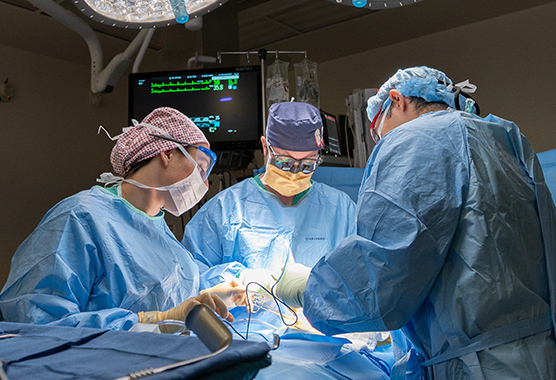
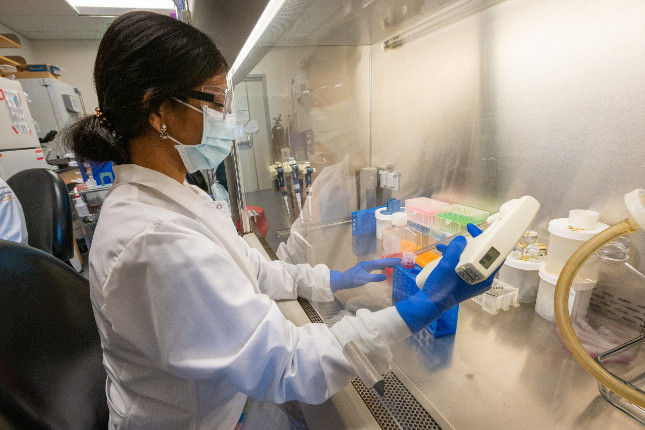
Building translational research goes to the heart of our research program. We believe in taking an interdisciplinary, collaborative team approach in order to share resources and knowledge. Our research activities reflect a wide spectrum that begins with basic medical laboratory research into the mechanisms of disease and how it occurs. Using this data, clinicians are dealing with the impact of disease to apply new therapies and treatments and conduct clinical trials. Meanwhile, department physician scientists orchestrate effective collaboration between researchers and clinicians by translating information and findings to and from the bedside.

UC Davis is the only regional institution to place significant emphasis on translational research, modeling our program on the best practices in medical science nationwide. Our success clearly demonstrates that better patient outcomes can be produced from collaboration between clinicians and researchers who are receptive to the idea of integrating their activities to enhance results.

Clinical Trials

Clinical trials are detailed protocols involving cutting-edge therapies designed to yield answers and recommendations for new ways of managing and curing disease. Courageous, dedicated patients volunteer to participate in trials with the ultimate hope of cure. Their contributions to the advancement of medicine can have a profound effect on others. Prominent successes have included postoperative therapy for women with breast cancer at high risk for recurrence; new therapy for hypertension, diabetes and osteoporosis; new interventions for heart attack victims; asthma treatment; and many more. An equal number of treatments are rejected as too dangerous or ineffective for broader use. This approach engenders a true respect for evidence-based medicine. Our physicians strive to make health-care decisions based on good science, while treating patients with respect and compassion.

Thus, the department is part of national and regional efforts in drug discovery, testing innovative approaches to illnesses previously unresponsive to treatment. We work with funding from the National Institutes of Health (NIH), the pharmaceutical industry and biotechnology to move quickly from the laboratory to the bedside. However, our clinical research is bidirectional, with our physician scientists providing both new leads for therapy and more accurate predictors of responses to treatment. We want to understand why some patients respond and others do not. This variability from one patient to another presents the essence of our challenge. The laboratory helps augment the clinical characteristics and facilitates understanding of clinical trials results.

Departmental Projects

The department is working on a multitude of projects:

  • We are participating in the NIH-sponsored Women's Health Initiative, which focuses on risk factors for cardiovascular disease, breast cancer and osteoporosis after menopause. We are also involved in the Cardiovascular Health Study for patients over 65 years of age.
  • UC Davis scientists were among the first in the country to be awarded NIH funding to study medicinal botanicals used in alternative medicine and are actively investigating their applications.
  • Our Liver Clinical Trials Research Center offers unique opportunities for research into liver disease as well as novel therapies and medications for treatment of hepatitis B and C through clinical drug testing. The UC Davis Transplant Research Institute is collaborating with Lawrence Livermore Laboratory to improve the transplant process by reducing infection and rejection.
  • Supported by the National Cancer Institute and private funding, our cancer developmental therapeutics group fills an urgent need for new, technically advanced approaches to cancer therapy. Since gene mutations cause cancer cells to no longer respond to conventional medicine, our physician scientists are working on treatments that can pinpoint the site of the cancer, making it unnecessary for patients to undergo extensive toxic treatments.
  • AIDS and HIV therapy has become increasingly sophisticated with regard to decisions about when to treat and what treatment to use. Ongoing clinical trials at our Center for AIDS Research are defining which precise treatments are the most effective and leading the way in the most pressing effort -- finding a vaccine. Researchers are also taking on the challenge of dealing with emerging infections and biological threats.

Health Services Research

The Center for Health Services Research in Primary Care, affiliated with the Department of Internal Medicine, provides research and evaluation services related to primary-care medicine and its organization, costs, quality and effect on patient outcomes. Specifically, the center evaluates the effectiveness of medical treatments and health-care delivery programs, assesses risk-adjusted outcomes, and strives to reduce medical errors and improve overall quality of care. In addition, center researchers hope to preserve and improve the physician-patient relationship, enhance rapport and communication, and increase clinician effectiveness in working with patients. Data is collected and used to reduce system barriers and modify policies and procedures that impede access to the best medical care.

Faculty from the department play a central role in integrating research into the clinical practices at UC Davis, encouraging involvement by primary-care physicians in research. Health-sciences research complements our general research philosophy because this work employs a multidisciplinary approach, drawing from many academic and clinical fields such as economics, epidemiology, biostatistics, nursing and medicine to evaluate and understand the impact of health services on both individuals and populations.